yolo - you only look once
arxiv - https://arxiv.org/pdf/1506.02640
-
original yolo paper 65k+ citations
-
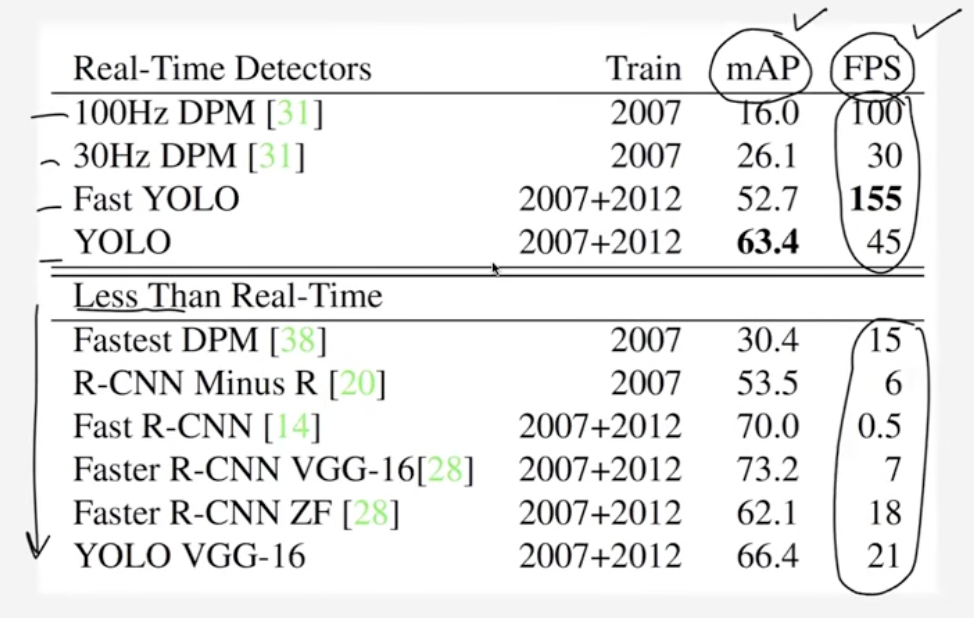
real time models - can process 24-30+ fps
-
use cases:
- video surveillance
- self-driving car
- face detection
- crowd monitoring during pandemic
-
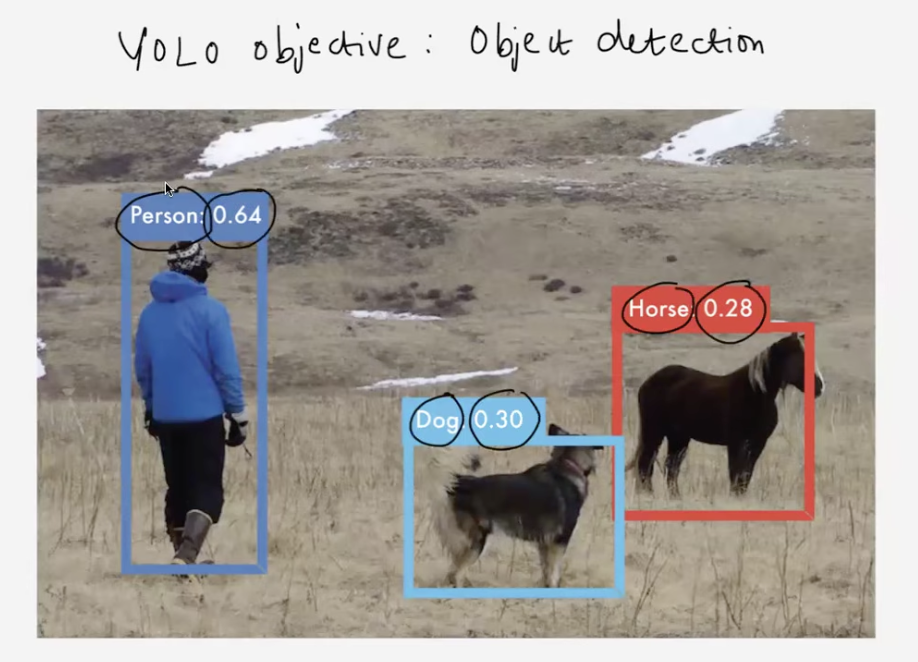
objective - object detection by annotating bounding boxes!
-
Before YOLO - we literally looked at the image more than once!
- sliding window detectors (pre CNN) - obj detection using hand made filters (no deep learning)
- Region proposal + classifier (RCNN)
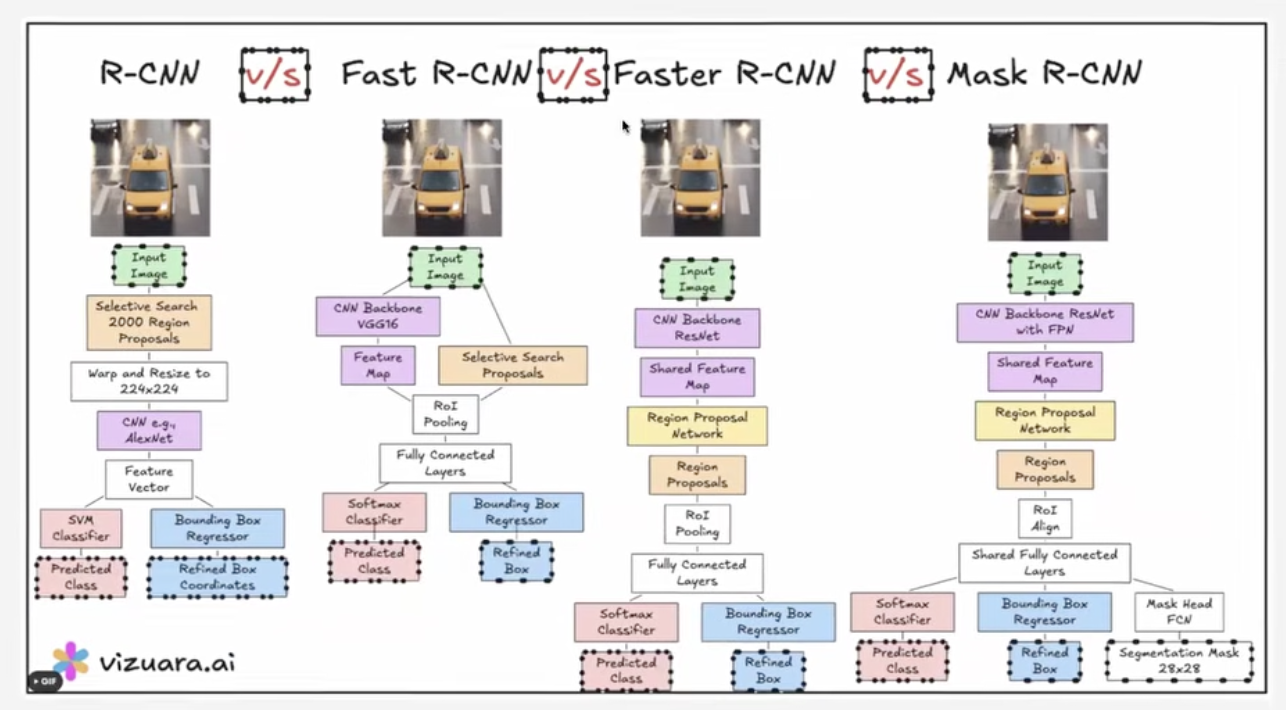
- in R-CNNs the region proposal network propose several sub sections of the image that the model inspects to decide which region has the best overlap with the image, however YOLO needs just a single fwd pass!
-
How could we possibly design such a system to detect objects?
- we could input the image and expect an output in the format like (p_obj, x, y, h, w, p_class1, p_class2) where p_obj= prob that an object is present, x,y= coordinates of the center, h= height, w= width, and p_class1= prob of class 1, and so on!
- but this method is not scalable because if there are multiple objects or multiple classes we need to scale this vector dimension!
-
How YOLO architecture works?
- Input and Output
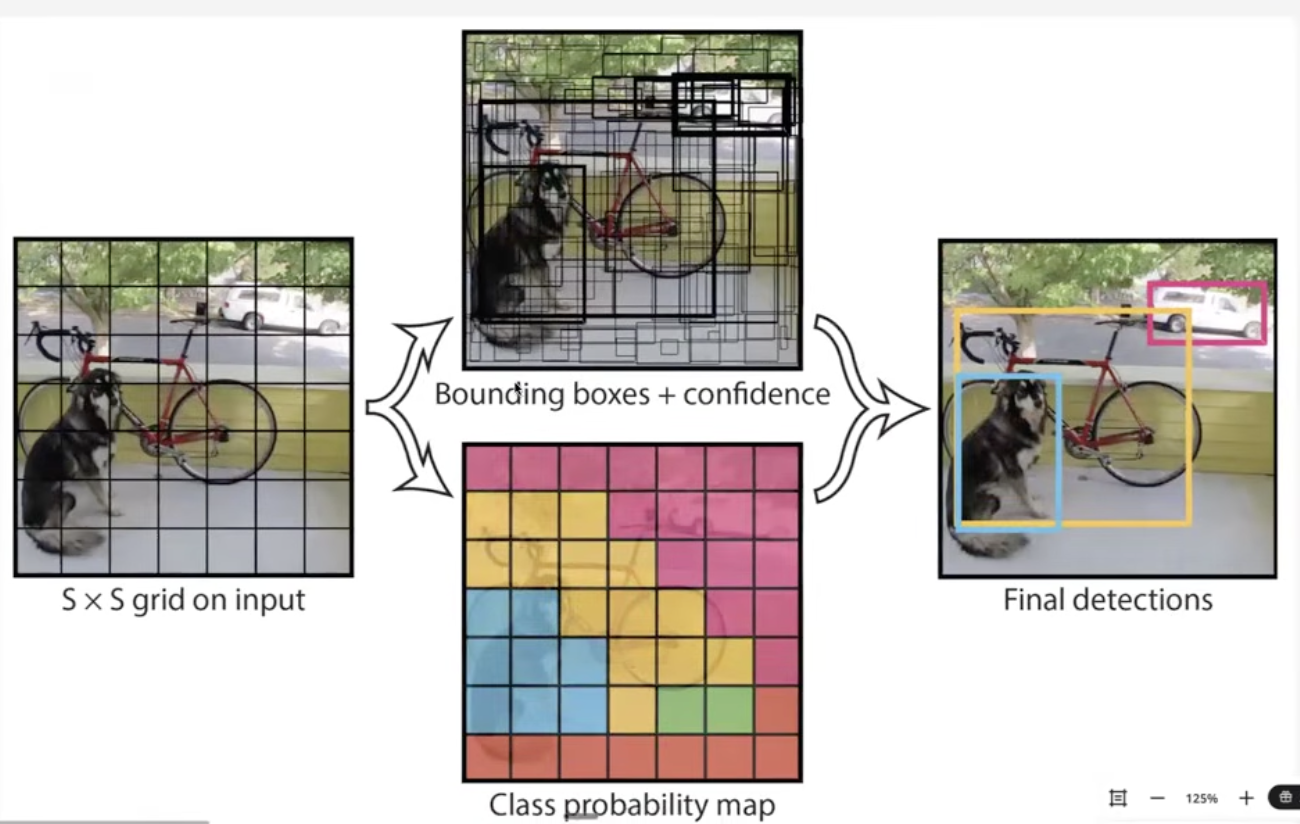
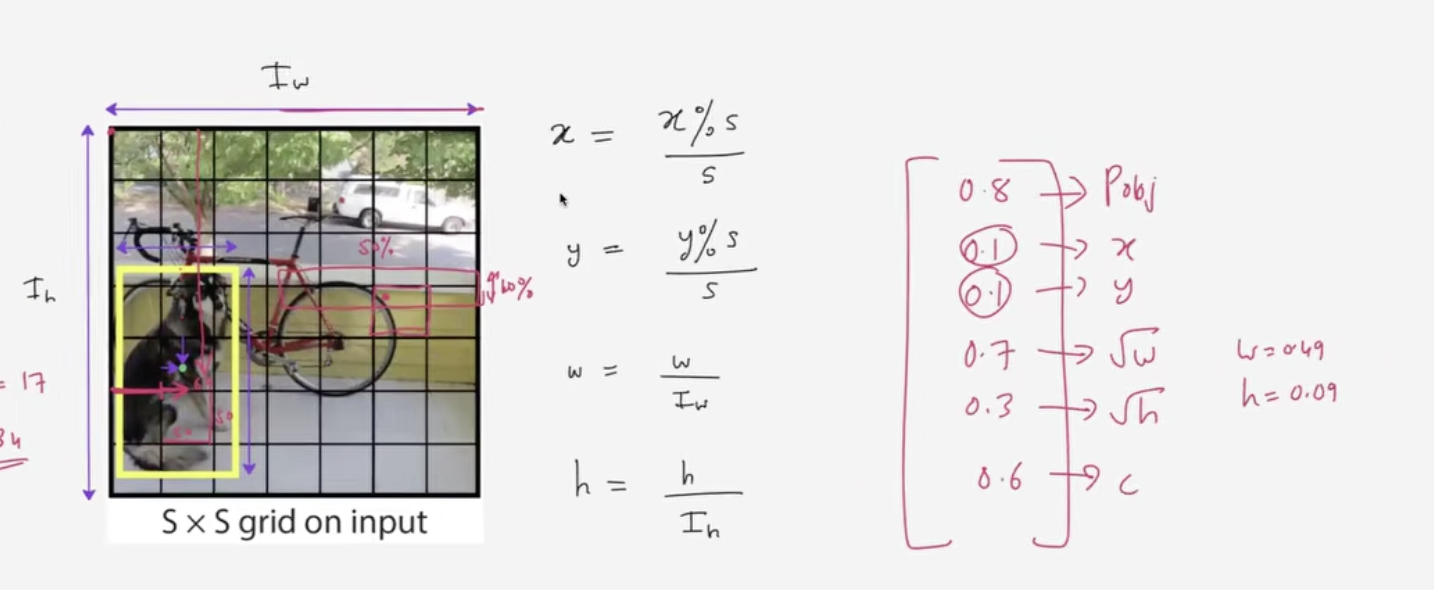
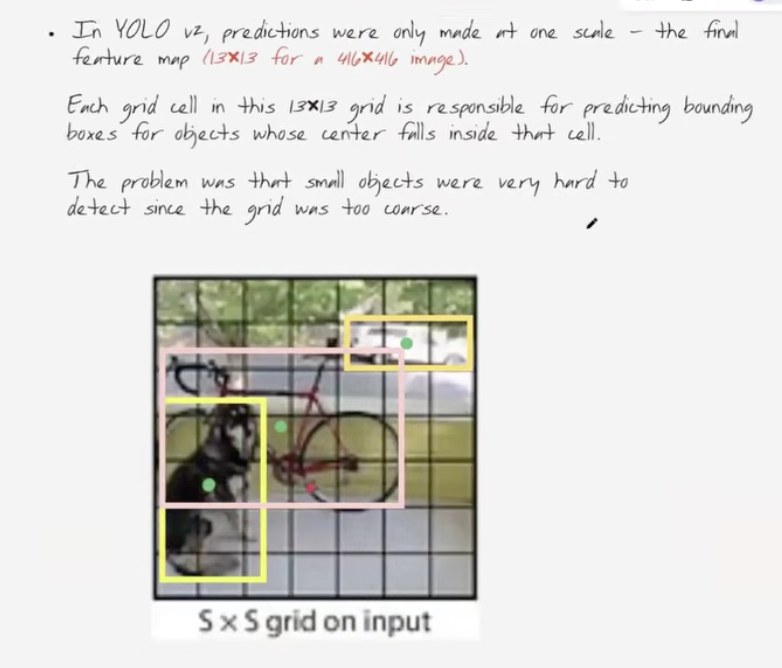
- in yolo we divide the input image into S x S grid where for each grid we need to predict 2 things:
- bounding boxes + confidence ie. (x, y, width, height, confidence score)
- output class probabilities (each box would have a highest class probability)
Note:
each grid can have multiple (B) bounding boxes and n class probabilities so that we can detect multiple objects i.e. if there are 7x7=49 grids we would have 49 * (2 x 5 + 3) outputs if each grid had 2 bounding boxes and predicted (x, y, width, height, conf) + output class prob for 3 classes
-
We also keep our 0 ⇐ x, y ⇐ 1 and 0 ⇐ w, h ⇐ 1 because we want to normalize these values for our NN! how?
- w → w/width of image
- h → h/height of image
- x → (x%s)/s
- y → (y%s)/s
-
how confidence score calc?
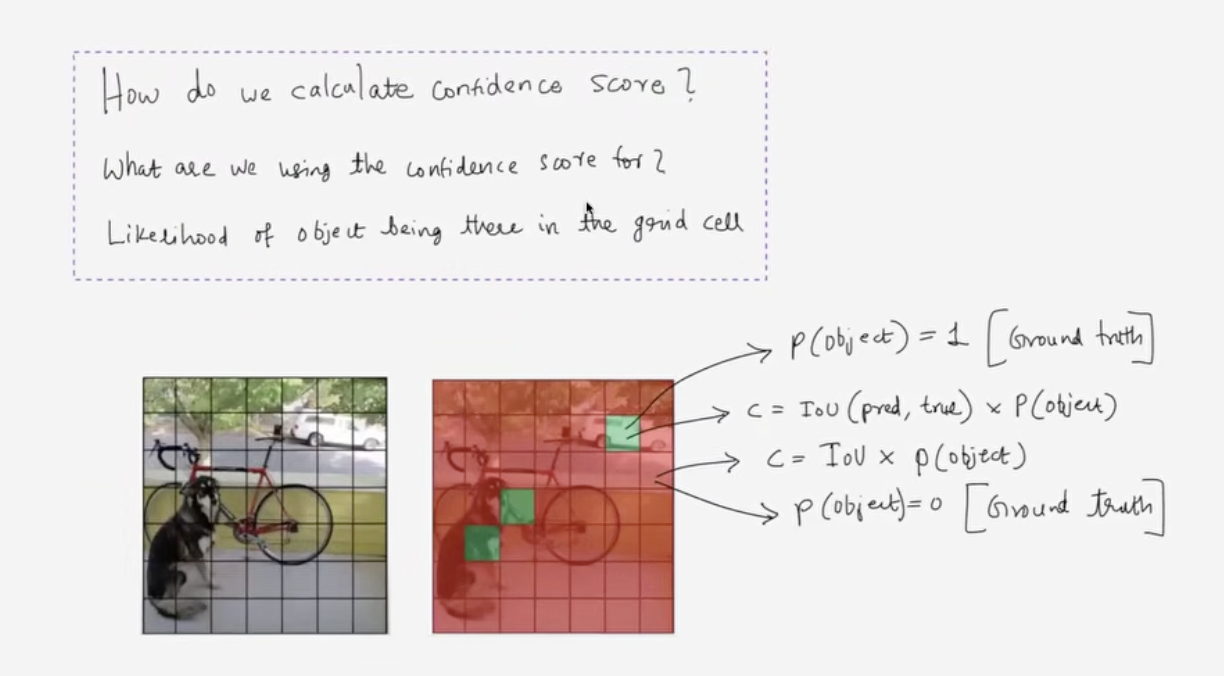
confidence = IOU (pred, GT) x P(object)
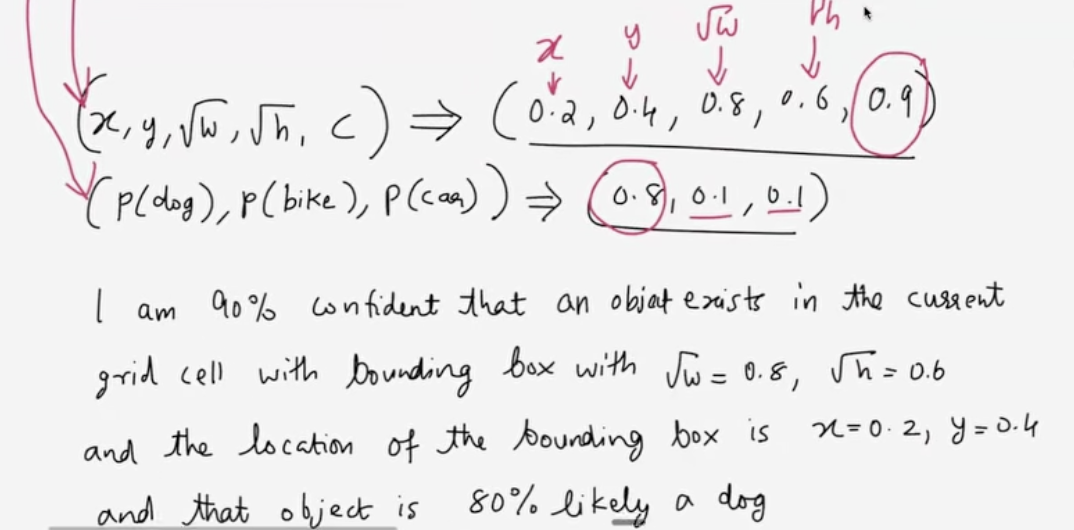
- since we know each grid can produce multiple bounding boxes we always chose the one with the highest IOU
What about inference? - We do not have the GT during inference like in training!
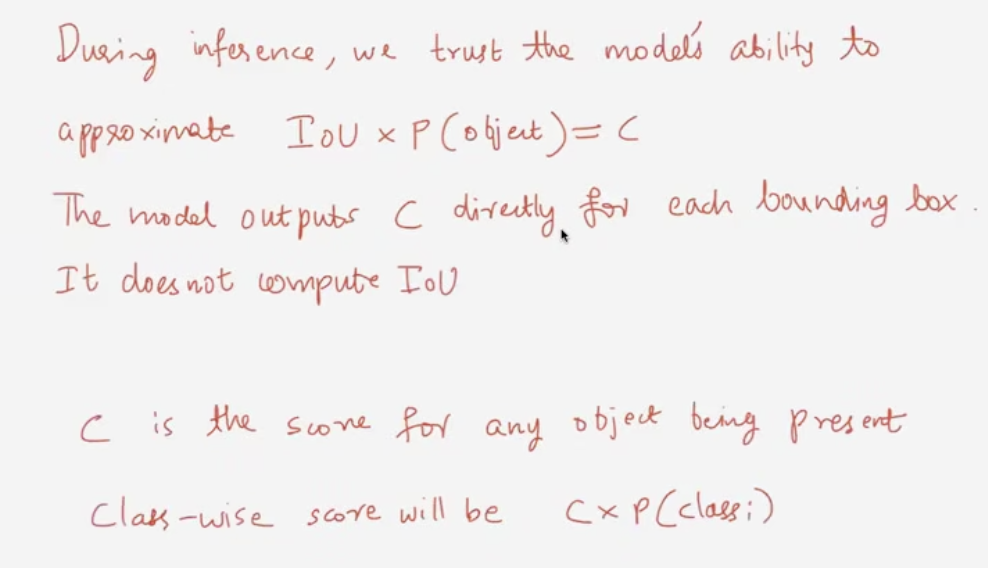
- Confidence during training = IOU x P(object)
- Confidence during inference = C (confidence predicted directly by the model) x P(class)
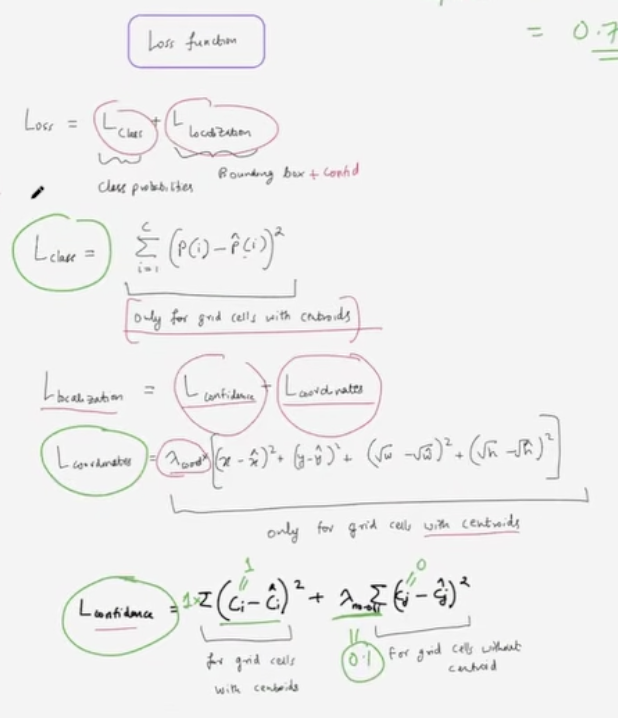
Loss Function - Object detection as Regression
-
what should we penalize our network for?
- wrong class prediction
- bbox location
- confidence score
-
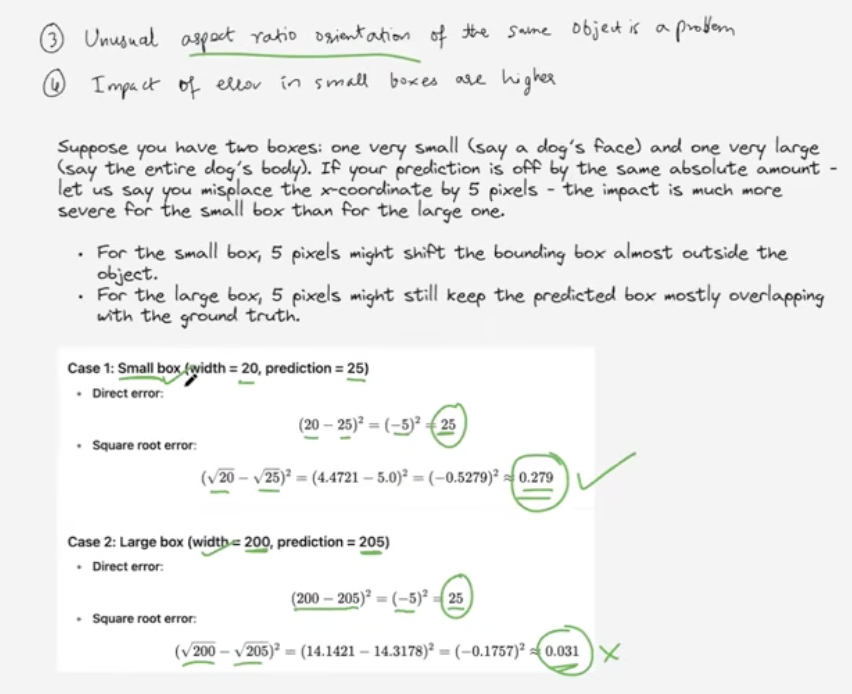
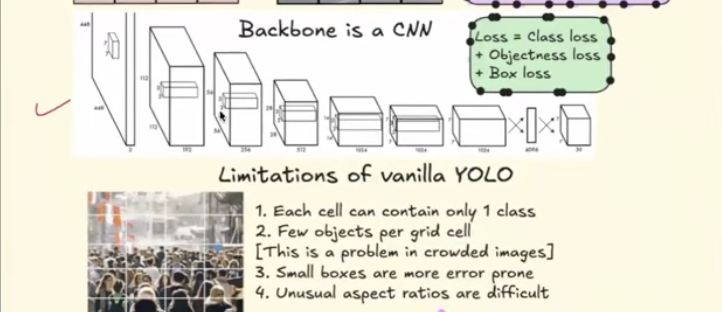
Limitations of YOLO
versions of YOLO model:
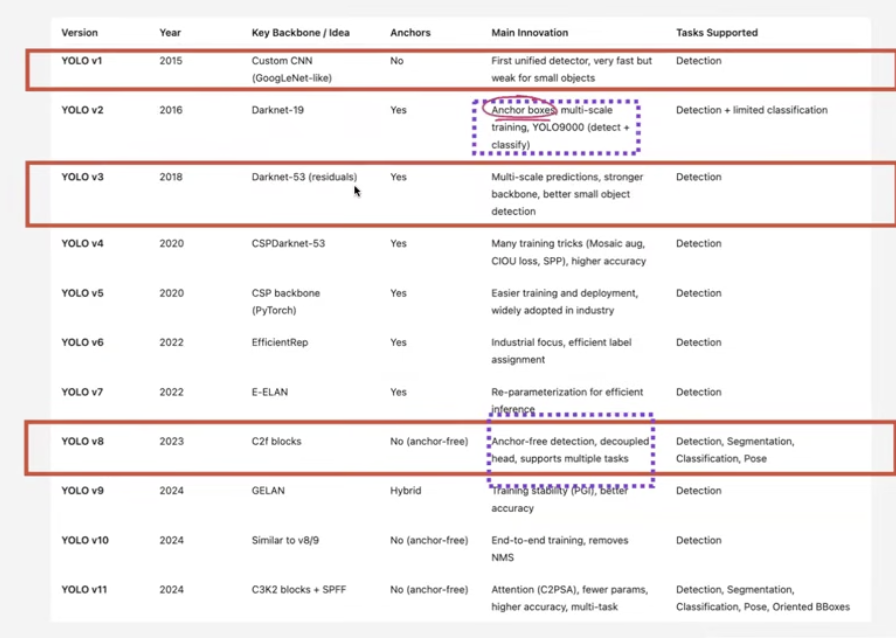
- yolo v1, v3, v8 → 3 revolutionary models

-
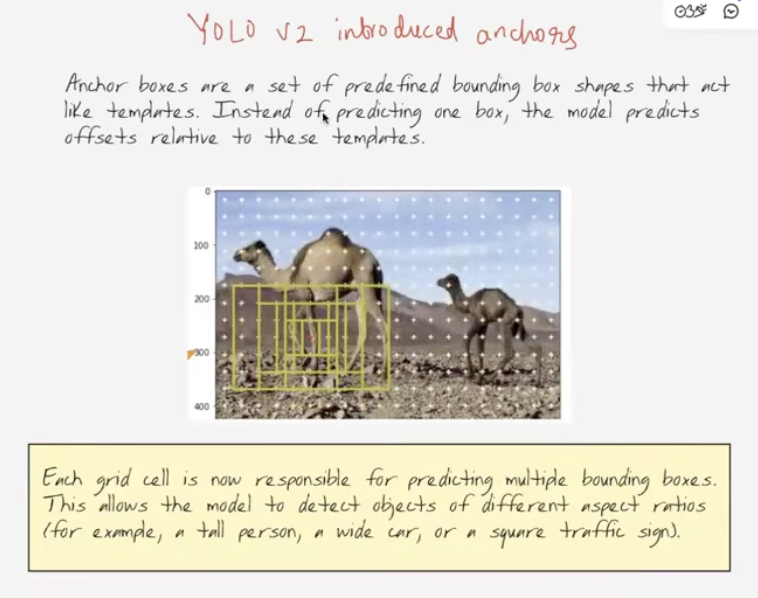
yolov2 introduced anchor boxes which solved the problem of weird aspect ratio for bounding boxes!
-
each anchor point can have 9 different anchor boxes
-
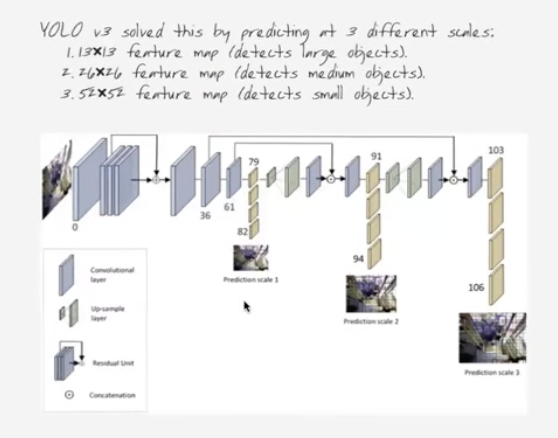
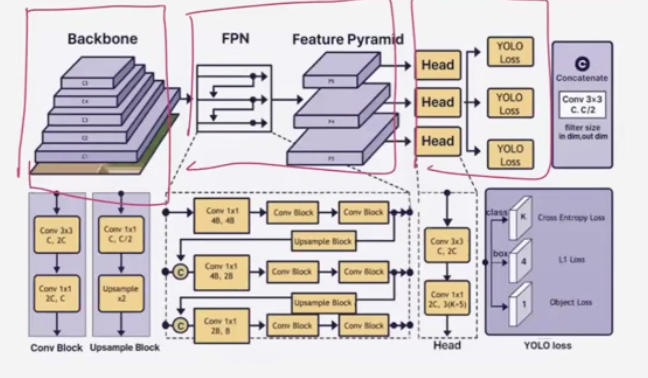
yolov3 used residual skip connections and mult-scale predictions
-
combines different grid sizes to make prediction!
-
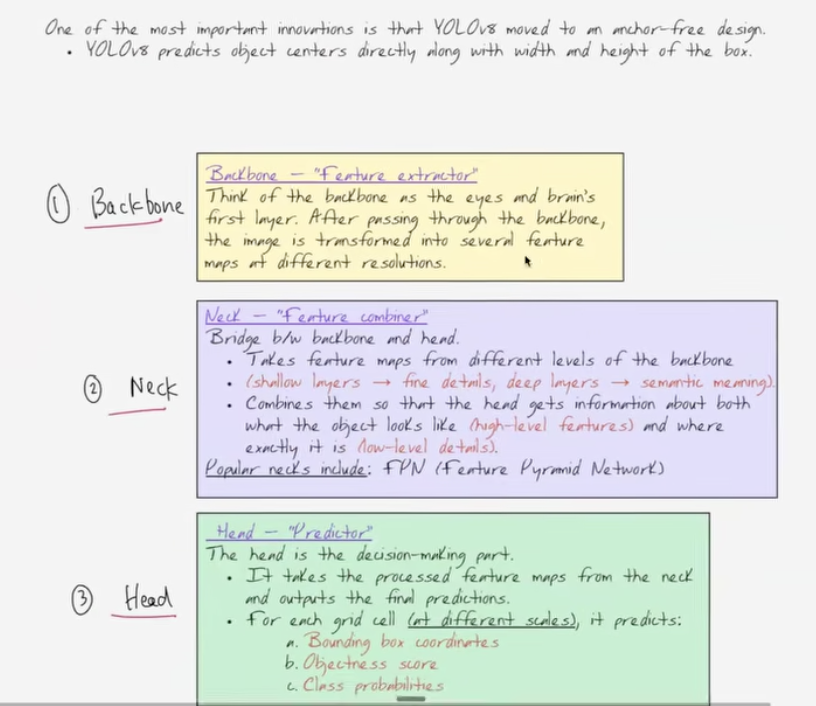
yolov8 - removed anchors, anchor free detection
Links:
202609050105