generative models
- generates o/p but many o/p valid
- if we know p(x) we can sample x ~ p and also estimate the likelihood of o/p
- p(x) does not have to be known explicitly!
- conditional generation - p(x|c)
- diff b/w generative and discriminative models
- discriminative - p(y|x) → only 1 true label y for each input x (many-to-one)
- conditional generative - p(x|c) → many valid outputs x for a condition c - (one-to-many or many-to-many)
- formulating generative modeling
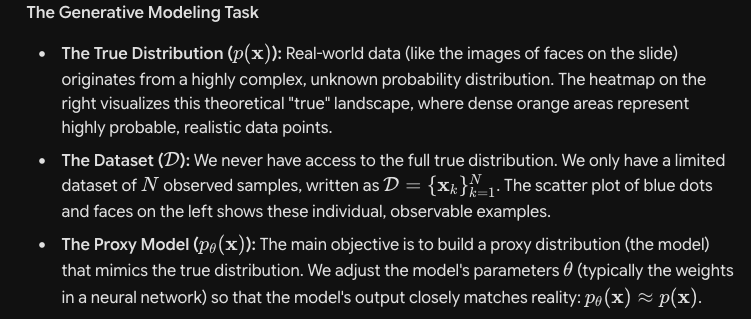
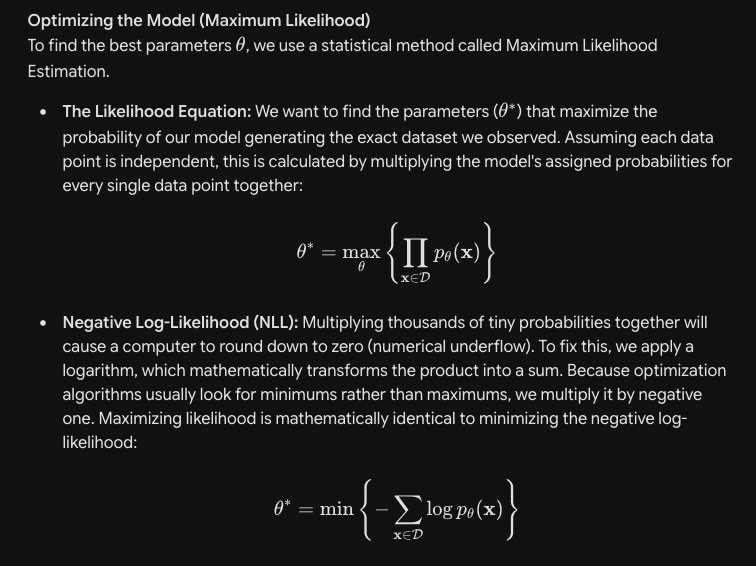
-
implicit vs explicit representations
- explicit - directly learn the probability density function using max likelihood estimation method ex- VAEs, Autoregressive GPT etc.
- implicit - bypass the need to calc exact probability numbers, the dist is learned within the model’s weights, instead focuses on generation ex- GANs
-
Types of Generative Models:
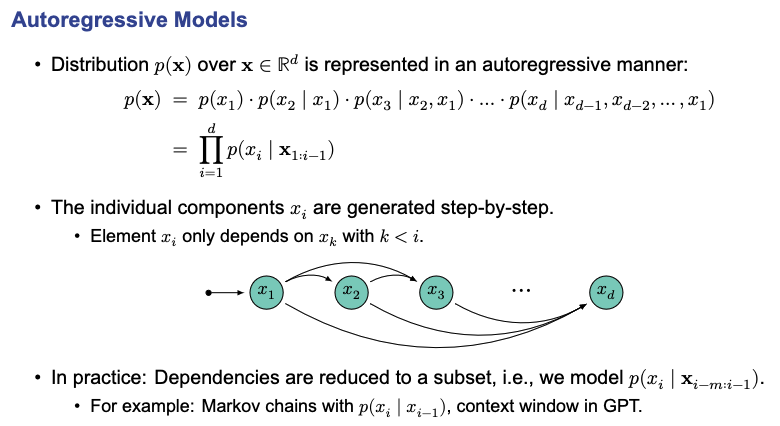
- Autoregressive Models
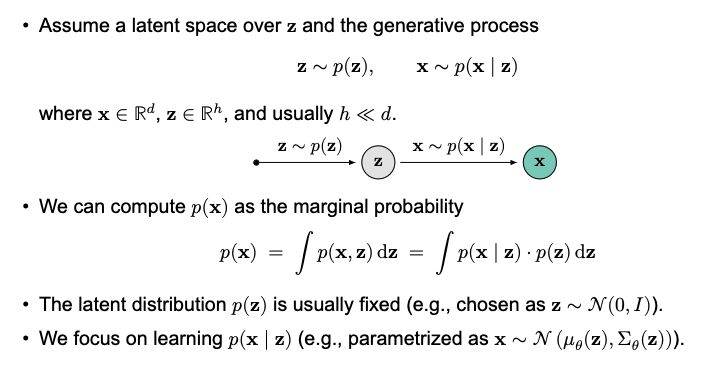
- Latent Variable Models
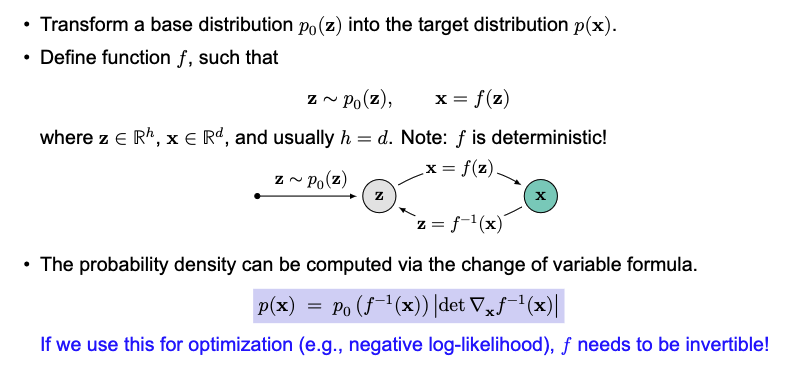
- Flow-based Models
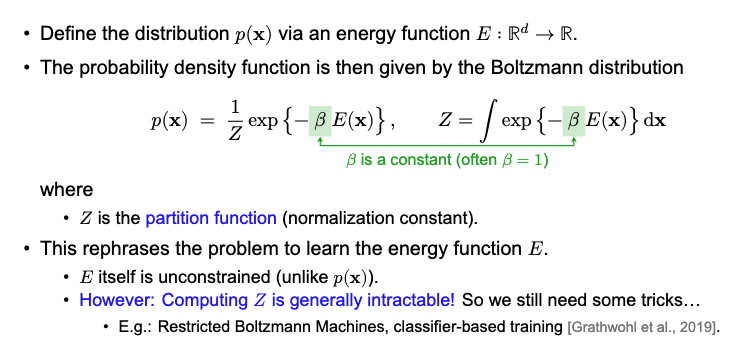
- Energy-based Models
- Autoregressive Models
-
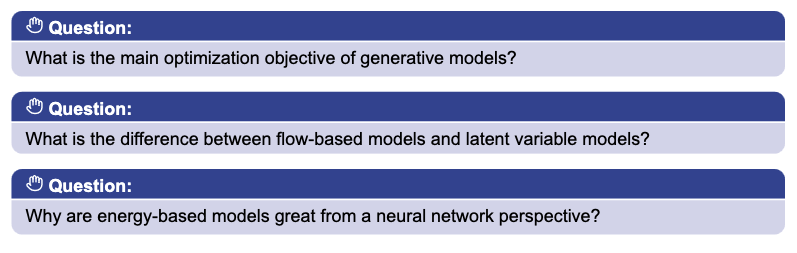
main objectives of generative model is to max -ve log likelihood
-
flow-based models - does not need a latent space, takes an intial dist and turns it into output dist.
-
latent variable models - sample a latent variable z and then conditionally generates the output based on the prior z.
-
directly allows to learn the energy function via NN, the exponential function ensures positivity and partition function ensures normalization.
-
Problem with partition function? → computing it is intractable!
-
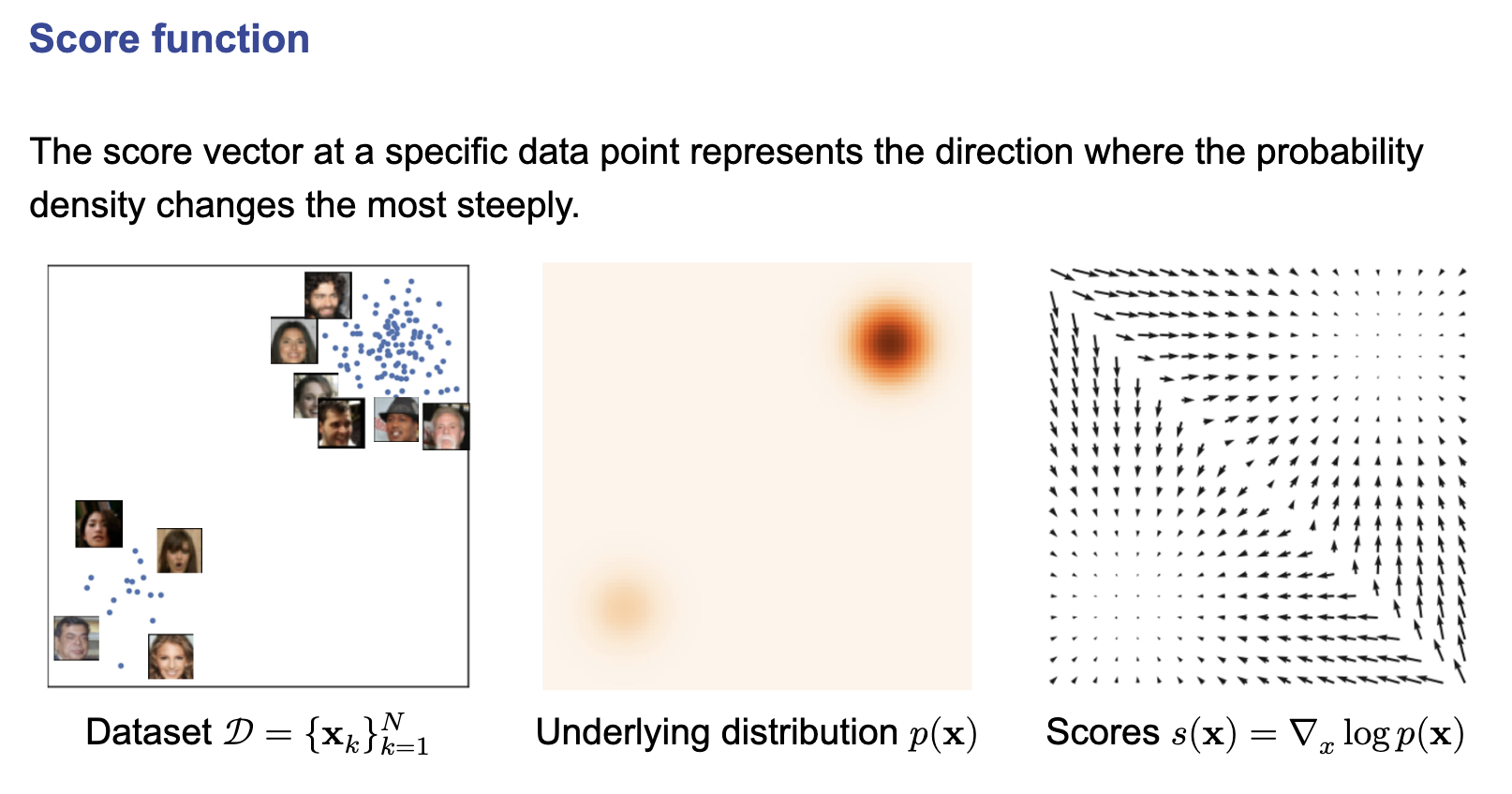
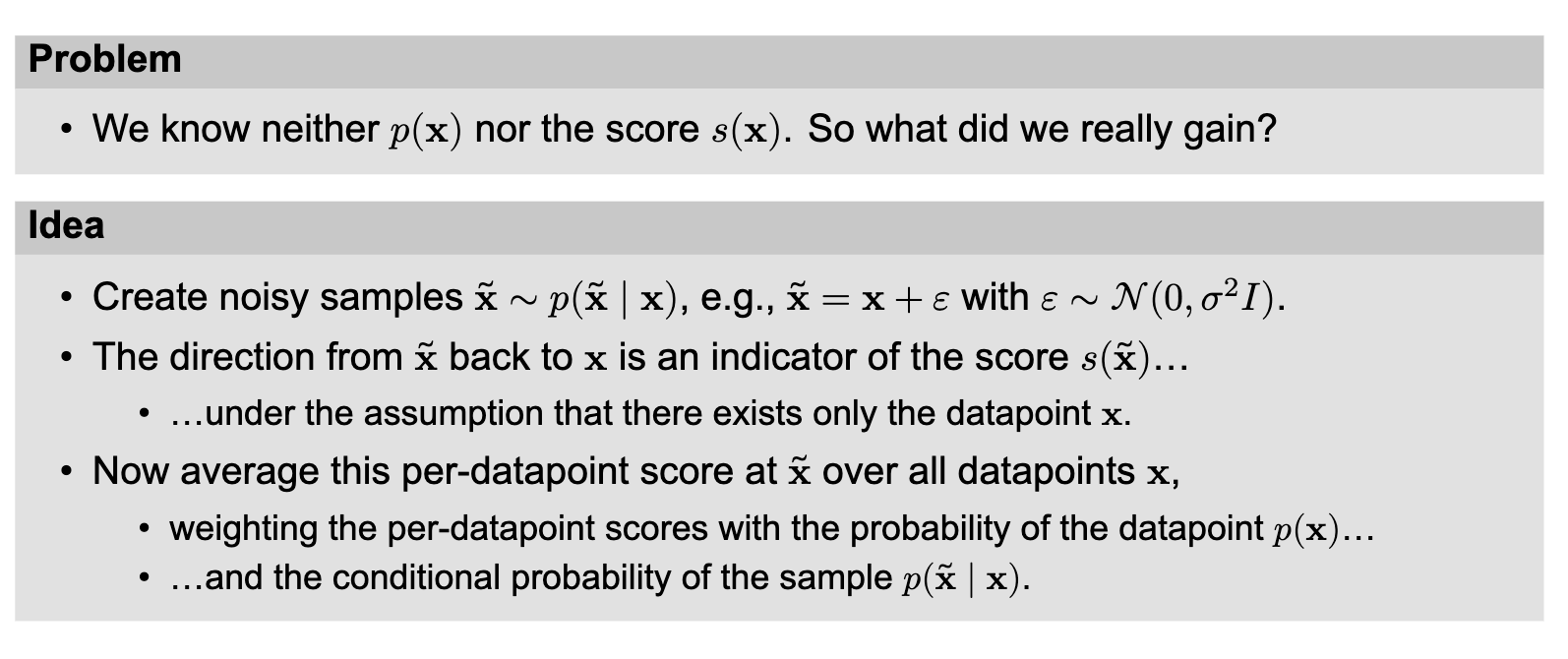
how to avoid the partition function? gradient of the log p(x) is the score function of p wrt to x
-
we can optimize the score (which is independent of the partition function) by minimizing the Fisher divergence which has the same optimum as the max log likelihood
-
Denoising Score matching
Links:
202609022007